

close
Choose Your Site
Global
Social Media
Views: 0 Author: Site Editor Publish Time: 2026-01-28 Origin: Site

Thermal Bonded Footballs have revolutionized the game, combining cutting-edge technology and innovative design for unmatched performance. From professional matches to casual training, these footballs offer seamless construction, precise flight, and superior durability. In this blog, we’ll explore thermal bonded football technology, panel structures, and their key benefits. You’ll learn why fewer seams matter, how materials like PU and TPU enhance control, and how these footballs perform in all weather conditions. Whether you’re a player, coach, or fan, discover why thermal bonded footballs are changing the way the game is played.
Football has come a long way. Early balls were simple. They were made from leather panels hand-stitched around animal bladders. They were heavy. They absorbed water. And their shape often became uneven. Players noticed it. The ball’s flight was unpredictable. Passing, shooting, dribbling—they all suffered. Then came machine stitching. It allowed for consistent seams and more durable construction. The 32-panel design became standard, combining hexagons and pentagons. It kept the ball rounder, handled better, and felt lighter. Players liked it because it offered more control, even on wet fields.
Materials also evolved. Synthetic leather, PU (polyurethane), TPU, and microfiber became common. They were lighter, more water-resistant, and durable. The touch improved too. They gave players better feel for passes and shots. And then came a real game-changer: thermal bonded footballs. Instead of stitching, panels were fused using heat and pressure. This created a seamless surface, smoother than anything before. The ball flew straighter, resisted water, and lasted longer. Aerodynamics improved. Control improved.
| Era | Material | Construction | Key Benefits |
|---|---|---|---|
| Early 1900s | Leather | Hand-stitched | Classic feel, but heavy and absorbs water |
| Mid 1900s | Leather/Synthetic blends | Machine-stitched, 32 panels | More consistent shape, better control |
| Late 20th c. | PU/TPU/Microfiber | Machine-stitched | Lighter, water-resistant, more durable |
| 21st c. | PU/TPU/Microfiber | Thermal bonded | Seamless, precise flight, enhanced durability |
This evolution mirrors player needs and tech advances. Each stage solved previous problems: weight, water absorption, inconsistent flight. They made the game faster, more precise, more enjoyable.
So, what exactly makes a thermal bonded football different from others? In simple terms, it’s a football where the panels are fused together using heat and pressure instead of stitching. This creates a seamless, smooth surface that improves performance and durability.
Not all footballs are built the same. Here’s a quick breakdown:
| Type | Construction Method | Pros | Cons |
|---|---|---|---|
| Hand-stitched | Leather panels sewn by hand | Classic feel | Absorbs water, heavy, uneven flight |
| Machine-stitched | Panels stitched by machine | More consistent shape, durable | Seams still affect flight and water absorption |
| Hybrid | Mix of stitching and thermal or synthetic bonding | Balanced touch and durability | Slightly less seamless than fully bonded |
| Thermal Bonded | Heat + pressure fuses panels | Seamless, precise flight, water-resistant | Higher manufacturing cost |
Panel Preparation – Panels made of PU, TPU, or microfiber are cut and shaped to fit perfectly.
Core Assembly – The panels are placed over the bladder, often latex or butyl.
Heat and Pressure – A controlled combination melts the adhesive at panel edges and fuses them.
Cooling – The ball cools down, solidifying the bond for a smooth, uniform surface.
Finishing Touches – Graphics, coatings, and textures are added to improve grip and feel.
This method eliminates stitching, making the ball more consistent and reliable in flight.
Seams aren’t just cosmetic. They affect almost every aspect of play:
Aerodynamics – Seams create drag, slowing the ball and affecting its trajectory. Fewer seams mean straighter flight.
Water Absorption – Stitched seams allow water in, making the ball heavier in rain. Thermal bonding prevents this.
Durability – Seams are weak points. They can tear or loosen over time. Bonded panels last longer under repeated impacts.
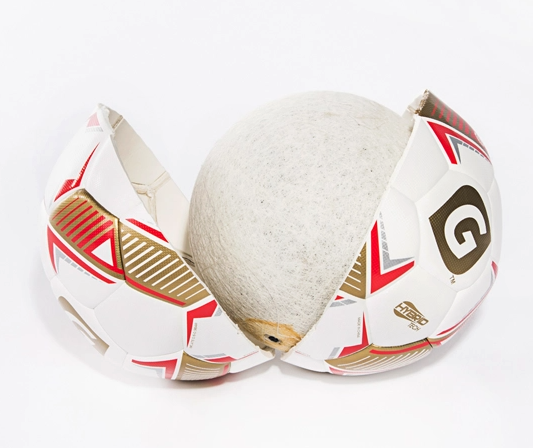
Panels are the heart of the football. The choice of material and design influences feel, durability, and flight.
Common Panel Materials:
PU (Polyurethane): Soft touch, durable, water-resistant
TPU (Thermoplastic Polyurethane): Highly abrasion-resistant, lightweight
Microfiber: Leather-like feel, excellent control, water-resistant
Typical Panel Counts:
8-panel: Professional-grade, smooth surface, excellent aerodynamics
14-panel: Competitive matches, balance of control and flight stability
24-panel: Training and recreational, easier to handle
32-panel: Classic design, recognizable look, stitched or hybrid versions
Professional vs. Recreational Balls:
| Feature | Professional | Recreational |
|---|---|---|
| Material | PU/TPU/Microfiber | PU or synthetic blends |
| Panel Count | 8–14 | 24–32 |
| Touch & Control | High precision | Moderate feel |
| Durability | Extremely high | Moderate |
Professional balls focus on precision, flight consistency, and durability, while recreational balls prioritize affordability and ease of use.
Creating a thermal bonded football is a mix of engineering and craftsmanship.
Step-by-Step Process:
Panel Preparation – Panels are precisely cut and shaped to fit the ball’s design perfectly.
Assembly over Bladder – Panels are placed over a bladder. Latex bladders give softer touch, but butyl bladders hold air longer.
Thermal Bonding – Heat melts adhesives at the edges, pressure fuses panels together. Seamless bonding forms a smooth, uniform surface.
Cooling and Inspection – Balls are cooled. Shape, roundness, and surface uniformity are rigorously checked.
Final Touches – Graphics, textures, and surface coatings are applied to improve grip and aesthetics.
The magic of thermal bonding lies in its seamless design.
Why It Matters:
Improved Aerodynamics – Less drag, more predictable flight path
Better Water Resistance – Seamless panels prevent water absorption
Enhanced Durability – No stitching weak points, withstands repeated impacts
Consistent Touch – Smooth surface improves passing, shooting, and dribbling
By eliminating stitching, thermal bonded footballs deliver superior performance compared to stitched or hybrid balls. Players notice the difference immediately.
Thermal bonded footballs aren’t just fancy designs—they bring real advantages for players, coaches, and teams. Let’s dive into the key benefits.
These footballs are engineered for consistent, high-level play:
Enhanced aerodynamics – Seamless surfaces reduce drag and allow straighter flight.
Consistent weight and shape – Balls don’t get heavier or misshape in wet conditions.
Predictable trajectory – Makes passing, shooting, and goalkeeping more reliable.
| Feature | Stitched Ball | Thermal Bonded Ball |
|---|---|---|
| Flight Consistency | Moderate | High |
| Wet Condition Weight | Increases | Stable |
| Predictable Trajectory | Limited | Excellent |
| Control on Passes | Standard | Enhanced |
These balls are built to last, whether for matches or training:
Seamless construction – Reduces points of wear and tear.
Shape retention – Keeps roundness longer than traditional stitched balls.
Versatile use – Ideal for professional matches and repeated practice sessions.
The smooth surface and materials help players feel more connected to the ball:
Smoother surface – Better touch, dribbling, and ball handling.
Material impact – PU, TPU, or microfiber affects grip, control, and feedback.
Precision play – Supports accurate passing, shooting, and ball control under pressure.
Modern football production considers the planet too:
Eco-friendly materials – Many thermal bonded balls use sustainable plastics or PU blends.
Longer lifespan – Reduces waste, fewer replacements compared to stitched footballs.
| Aspect | Stitched Ball | Thermal Bonded Ball |
|---|---|---|
| Materials | Standard PU or leather | Eco-friendly PU/TPU/microfiber |
| Lifespan | Moderate | Extended |
| Waste Reduction | Low | High |
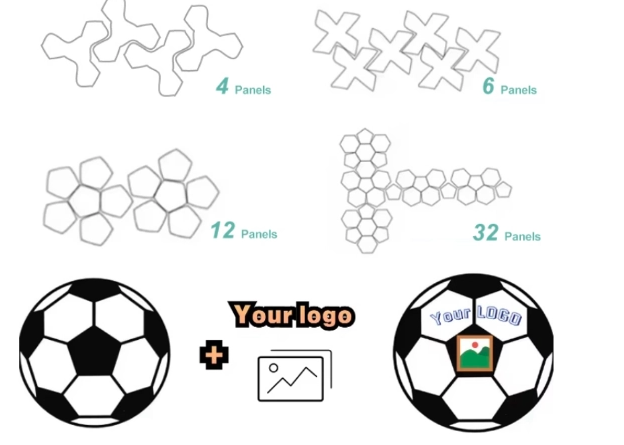
The panel pattern of a football plays a huge role in how it moves, feels, and performs. Different designs change aerodynamics, control, and even the way the ball reacts in wet conditions.
The classic 32-panel football is made of 20 hexagons and 12 pentagons, usually stitched or machine-stitched. It’s instantly recognizable and great for casual or recreational play. However, the seams can affect aerodynamics, creating slight drag and uneven flight, and the shape is not always perfectly spherical.
The 24-panel design reduces the number of panels, giving the ball a more spherical shape. This smoother surface minimizes seam interference and improves aerodynamics, making passes and long shots more accurate. Many training and amateur balls use this pattern because it balances control and durability.
Fourteen-panel balls, often made with thermal bonded construction, feature a smooth, consistent surface. The minimal seams reduce drag and give players better touch and control. This pattern is popular for competitive matches where precision matters, allowing passes, shots, and dribbling to feel more predictable.
Advanced thermal bonded footballs often use an 8-panel design. Fewer panels mean fewer seams, resulting in an optimal flight path and excellent stability. These balls are preferred in professional matches because players can rely on consistent trajectory and precise control for shooting, goalkeeping, and tactical play.
At the cutting edge of football technology is the continuous surface design, which eliminates panels altogether. This seamless construction maximizes aerodynamics, reduces drag, and prevents water absorption. Professional-level players benefit from extreme precision, smoother touch, and consistent performance under any condition.
A: Yes, their seamless construction reduces water absorption, keeping weight and performance consistent in wet or rainy conditions.
A: No, fewer seams create a smoother surface, enhancing touch, dribbling, and precision for both passing and shooting.
A: They are highly durable and retain shape longer than stitched balls, often lasting multiple seasons of professional or recreational play.
A: PU, TPU, and microfiber influence grip, touch, control, and durability, with higher-quality materials providing better feel and flight consistency.
A: Many are made from eco-friendly materials and their longer lifespan reduces waste compared to traditional stitched footballs.
Thermal bonded footballs aren’t just equipment—they’re a game-changer for anyone serious about football. Their seamless panels, advanced materials, and precise construction give players control, consistency, and confidence every time they step on the pitch. From sharper passes to more predictable shots, you’ll feel the difference immediately.
At Elite Co., Ltd., we specialize in high-quality thermal bonded footballs designed for professionals and enthusiasts alike. Explore our range and experience football performance that matches your passion, whether training, competing, or enjoying a weekend match with friends.


