

close
Choose Your Site
Global
Social Media
Views: 0 Author: Site Editor Publish Time: 2026-01-28 Origin: Site

Thermal Bonded Football technology has changed how modern soccer balls are designed, built, and used at the highest levels. If you have ever wondered why today’s match balls feel smoother, fly more consistently, and perform better in wet conditions, thermal bonding is the reason. In this guide, we explore what a thermal bonded football is, how it is made, and why professionals trust it. Whether you are a player, coach, or buyer, this article breaks it down clearly and practically.
A thermal bonded football is a modern soccer ball designed for high performance, consistency, and durability. Instead of being stitched together, its panels are fused using advanced bonding technology. This construction method has become the standard for elite matches and professional-level play.
Thermal bonding is a manufacturing process that uses heat and pressure to join the ball’s outer panels. The panels are placed inside a precision mould, heated, and pressed together until they form a single, unified shell. Unlike traditional stitched balls, there are no threads or exposed seams. Everything is sealed smoothly. It looks clean. It feels different immediately.
Bonded seams rely on heat-activated adhesive
Stitched seams rely on thread and needle
Bonded panels form a continuous surface
Stitched panels always leave small gaps
Because seams are usually the weakest point. Remove them, and the ball becomes stronger, more stable, and more predictable during play. It also helps reduce water intake and keeps the ball closer to its original shape.
Thermal bonded footballs share several defining features that separate them from stitched or glued balls.
Seamless outer surface
It feels smooth. It rolls cleanly. Touch stays consistent.
High shape consistency
The ball stays round longer. Deformation is minimal, even after heavy use.
Low water absorption
Rain doesn’t soak in easily. Weight stays stable during wet matches.
Uniform weight distribution
Balance feels natural. Flight paths stay predictable.
| Feature | Thermal Bonded Football | Stitched Football |
|---|---|---|
| Panel connection | Heat + pressure | Thread stitching |
| Surface finish | Seamless | Visible seams |
| Water resistance | Very high | Moderate to low |
| Shape retention | Excellent | Varies over time |
| Match-level use | Elite / Professional | Training / Match |
Because of these characteristics, thermal bonded footballs are often chosen for top-level competitions, where consistency matters more than anything else. Players trust how it reacts. Coaches trust how it performs.
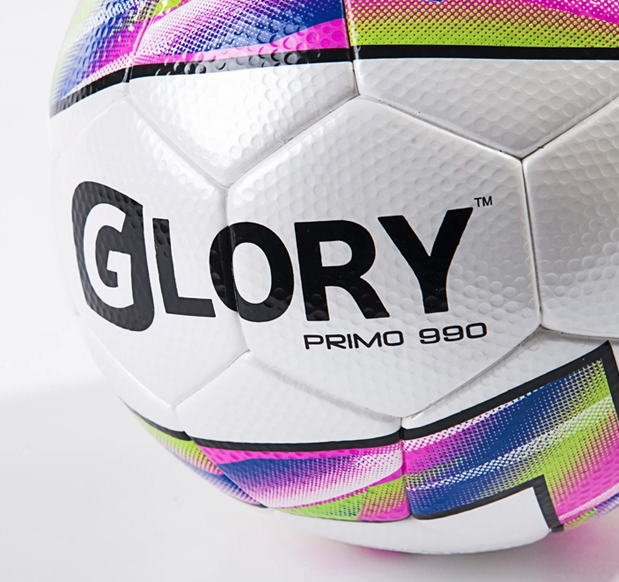
Thermal bonded footballs follow a precise manufacturing process. Each stage focuses on accuracy, consistency, and performance. We walk through it step by step, from raw materials to match-ready ball.
Everything starts at the panel level. Materials matter here more than most people realize. Most thermal bonded footballs use high-grade polyurethane (PU) for the outer panels. It feels soft on contact. It lasts longer during repeated play. It also handles strong impact without cracking or tearing.
Key design considerations include:
PU outer panels
They resist abrasion from grass and turf. They help maintain a consistent surface feel over time.
Panel thickness consistency
Uniform thickness keeps the ball balanced in motion. It prevents wobble during flight and bounce.
Surface textures and panel geometry
Textures improve grip during control and passing. Curved panel shapes help manage airflow and stability.
Design teams test panel shapes digitally before production begins. They simulate kicks, spins, and impacts. Small design changes can noticeably affect performance.
Once panels are ready, they move into a precision mould. Each panel fits into a defined position. Alignment matters a lot here. Even minor shifts can change roundness and balance.
Key steps during this stage include:
Panels lock into place accurately
Moulds control the final spherical shape tightly
Curved edges replace traditional straight stitching lines
Thermal bonding allows fewer panels than stitched designs. Straight seams are no longer required. Designers gain more freedom to experiment with shapes and layouts.
This step defines thermal bonding itself. Adhesive is applied carefully along the edges of each panel. It stays inactive at room temperature. Nothing bonds yet.
The mould then closes. Heat rises gradually. Pressure builds evenly from all sides.
During bonding:
Adhesive activates under heat
Panels fuse together evenly
Seams disappear into the surface
The result is a single seamless spherical shell. There are no threads. There are no stitch holes. Weak points are greatly reduced.
Inside the shell, internal layers complete the structure. Most balls use one of two bladder types:
| Bladder Type | Key Benefit | Typical Use |
|---|---|---|
| Latex | Softer feel | Match play |
| Butyl | Better air retention | Training |
Between the bladder and outer shell sits the fabric carcass layer.
It serves several purposes:
Reinforces shape
Distributes impact force
Improves rebound consistency
When the ball is kicked, energy spreads evenly. Touch feels predictable.
After bonding, the ball cools gradually. Shape stabilizes during this phase. Then testing begins.
Manufacturers check:
Shape retention under repeated impact
Water resistance in wet conditions
Weight and bounce compliance to match standards
Balls failing any test are removed. Only consistent performers move forward. Every step exists for one reason. It ensures the ball plays the same today, tomorrow, and months later.
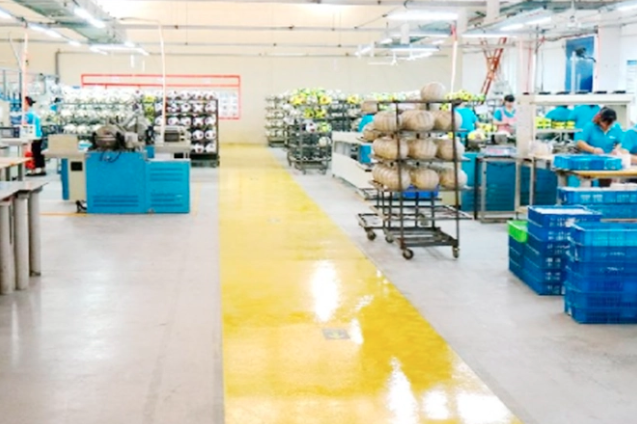
Football design didn’t change overnight. It evolved step by step, driven by materials, physics, and player demands. Each generation solved problems. Each also created new ones.
The earliest footballs were made from natural leather panels stitched around an inflatable bladder. A major breakthrough arrived with the invention of the vulcanized rubber bladder, which allowed the ball to bounce properly and made inflation practical. Even so, leather brought persistent problems. The panels stretched gradually, causing the ball to lose its round shape over time.
Leather also absorbed water easily, so rain made the ball heavier and harder to control. Panel thickness varied, and early cutting methods lacked precision, which led to uneven shapes. During wet matches, the ball felt heavy and uncomfortable. Heading became painful. Overall control and consistency suffered on the pitch.
Everything changed in the 1960s. Synthetic leather entered the game. Manufacturers gained better control over materials. Panels became more uniform. Shapes became predictable.
The most famous design followed soon:
32-panel truncated icosahedron
12 pentagons. 20 hexagons. Almost perfectly round.
Two stitching methods emerged:
| Construction Type | Key Traits | Common Use |
|---|---|---|
| Hand-stitched | Strong seams, softer feel | Match, elite training |
| Machine-stitched | Faster production, lower cost | Training, schools |
Synthetic balls solved many leather issues. They absorbed less water. They held shape longer. Some drawbacks remained. Stitching created weak points. Seams still absorbed moisture. Labor costs stayed high.
Thermal bonding changed everything again. Instead of stitching, manufacturers used heat and pressure to fuse panels together. Seams disappeared. The first thermal bonded balls appeared in major professional tournaments in the early 2000s. Adoption was fast. Elite competitions wanted consistency. They wanted reliability. They wanted predictable flight.
Thermal bonding delivered:
Fewer panels, more creative shapes
Better shape retention under impact
Improved aerodynamics through smoother surfaces
Designers gained freedom. Curved panels replaced straight seams. Surface textures began influencing airflow. Modern footballs now fly differently. They react faster. They behave more consistently across conditions.
Not every player needs the same type of football. Thermal bonded balls shine in specific situations. They deliver their best value when performance consistency really matters.
At the professional level, every detail matters. A thermal bonded football delivers the consistency elite competitions require. Referees, teams, and broadcasters expect the ball to perform identically from kickoff to final whistle. Predictable flight paths help players judge passes and shots. Stable touch improves control under pressure. Seamless construction reduces weak points. Water resistance keeps weight unchanged during rain. This reliability is why top tournaments specify thermal bonded match balls.
High-intensity training works best when players use a thermal bonded football similar to match equipment. It allows them to train reactions, touch, and timing accurately. Muscle memory develops faster. Passing weight feels familiar. Shooting response stays consistent. When practice conditions match competition conditions, players adjust less on game day. Confidence builds because the ball behaves exactly as expected during drills and scrimmages.
A thermal bonded football is not always the smartest choice. Junior players focus on fundamentals, not precision flight. Schools and community programs often prioritize affordability and durability. Stitched balls cost less and handle rough use well. Thermal bonded designs also cost more and usually remain permanently inflated. In these settings, performance benefits may not justify the investment.
A: Yes. Seamless bonded panels reduce water entry. It stays light during rain. Performance remains stable.
A: Most do. They trust consistent flight, touch, and shape. Top tournaments use them.
A: Usually one to three seasons. It depends on usage intensity and surface conditions.
A: For matches and serious training, yes. For schools or casual play, maybe not.
From materials to manufacturing, thermal bonding explains why modern match balls feel faster, lighter, and more reliable on the pitch. Understanding how a thermal bonded football is built helps you choose the right ball for competition, training, or development. Performance is never accidental. It’s designed, tested, and refined at every step.
At Elite Co., Ltd., we focus on delivering football solutions aligned with professional standards. If you’re sourcing match-ready or high-performance balls, our team is ready to help you find the right fit for your market and players.


